

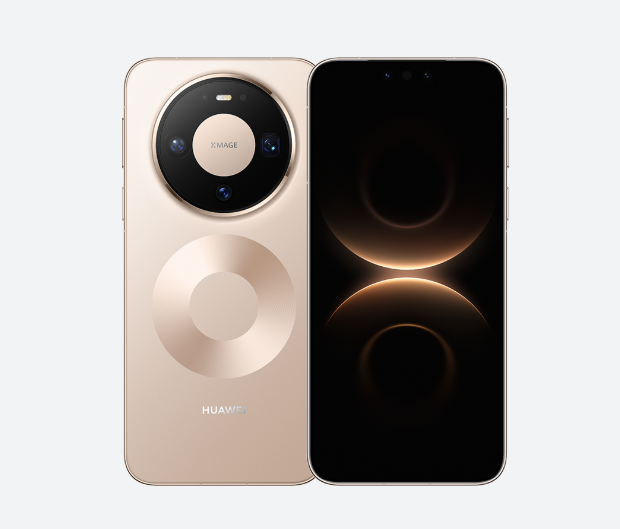
If you’ve followed the smartphone industry for the last decade, you know that the “Mate” badge carries a certain weight. While many brands are content with incremental year-over-year updates, Huawei’s Mate line has historically been the place where the company “unleashes” its most ambitious engineering.
With the global rollout of the huawei mate 80 Series, we’re seeing the culmination of a twelve-year journey that started with a simple goal: making the ultimate big-screen phone for power users. Let’s take a walk down memory lane and see how we got to this latest milestone.
The Early Days: Defining the “Phablet”
Back in 2013, the original Ascend Mate was a bit of an outlier. While most people were still carrying 4-inch screens, Huawei dropped a massive 6.1-inch display. It was bold, a bit polarizing, but it proved one thing: there was a huge appetite for devices that could act as a pocket cinema and a productivity hub.
By the time the Mate 7 arrived in 2014, the series had found its identity. It introduced one of the first truly reliable rear-mounted fingerprint scanners and established the high-end, metallic design language that defined the series for years. It wasn’t just a big phone anymore; it was a sophisticated tool for professionals.
The Imaging Revolution
The next big pivot came in 2016 with the Mate 9, which marked the beginning of a legendary partnership in mobile optics. This era saw the introduction of dual-lens systems and, eventually, the iconic “Space Ring” design on the Mate 30 and Mate 40.
Huawei stopped just following camera trends and started setting them. Features we now take for granted—like dedicated Night Mode, AI-assisted scene recognition, and periscope zoom—often made their debut or found their footing within this lineup. This expertise in light and color paved the way for the proprietary XMAGE system we see today, which focuses on “True-to-Colour” accuracy rather than just boosting saturation for social media.
The Peak of Durability and AI
Fast forward to today, and the huawei mate 80 Series represents a shift from “powerful hardware” to “systematic maturity.” It’s no longer just about having the fastest chip (though the Kirin 9030 is certainly no slouch); it’s about how that power serves the user’s environment.
One of the standout evolutions in this latest generation is the move toward “Super Durable Architecture.” We’ve gone from fragile glass sandwiches to devices reinforced with Second Generation Kunlun Glass. This isn’t just marketing fluff—the drop resistance has improved nearly 20 times compared to standard glass. When you add the IP68 and IP69 ratings (which protect against high-pressure water jets), you have a flagship that’s built like a tank but looks like a piece of jewelry.
Intelligence That Actually Matters
What truly sets the huawei mate 80 Series apart from its predecessors is the seamless integration of AI. In the past, AI was often used for “gimmicks”—flipping through photos with hand gestures or basic voice commands.
Now, the AI is a core part of the workflow. Features like AI Remove allow you to clean up a busy photo with a tap, and AI Composition helps you frame shots like a pro by suggesting better angles in real-time. Even the call quality has been revolutionized with AI-driven noise cancellation that can isolate your voice in a crowded subway. It’s the kind of innovation that doesn’t scream for attention but makes you wonder how you ever lived without it.
Why the Evolution Matters (The EEAT Perspective)
When looking at the history of this series, it’s clear that Huawei’s “Experience, Expertise, Authoritativeness, and Trustworthiness” comes from a decade of trial and error. They’ve spent years perfecting signal technology (like the new seamless 2.4GHz connection that works miles away from a cell tower) and battery management (moving to massive 5750mAh to 6000mAh cells).
This isn’t a brand trying to find its footing; it’s a brand that knows exactly who its audience is: people who want the best technology but need it to survive the rigors of real life.
Final Thoughts
The story of the Mate series is one of constant boundary-pushing. From the “pocket cinema” days of 2013 to the AI-powered, nearly indestructible huawei mate 80 Series of 2026, the evolution has been remarkable.
It’s rare to see a product line maintain its “North Star” for over a decade, but the Mate series has done just that. It remains the “ultimate” version of what a smartphone can be—a perfect marriage of professional-grade performance and everyday practicality. Whether you’re a long-time fan or a newcomer to the brand, this latest chapter proves that true innovation isn’t about one-off stunts; it’s about the steady, relentless pursuit of a better user experience.
