

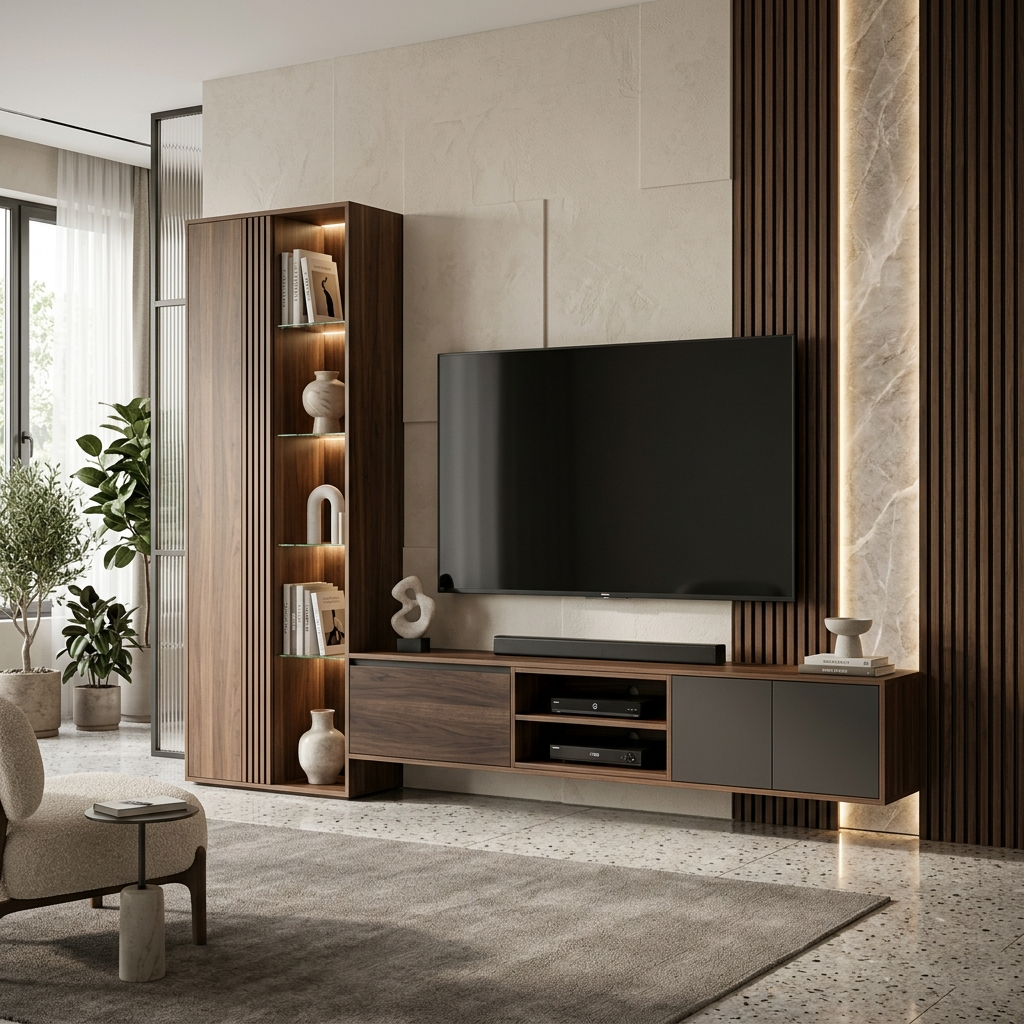
The television area usually becomes the most noticed part of the living room without people even planning it that way. No matter how well arranged the rest of the house is, attention naturally moves toward the TV wall once someone enters the room. That is why the setup around it matters so much.
Years ago, TV cabinets were treated like simple furniture pieces used only for holding electronics. Now they affect the overall look of the living room far more than before. They also need to handle much more than a television. Wires, speakers, gaming devices, routers, storage boxes, décor items, and everyday accessories all slowly become part of the same space.
At the same time, modern homes are changing. Apartments are becoming more compact, layouts are more open, and living rooms often serve multiple purposes during the day. Because of this, TV cabinet designs now need to balance storage, appearance, and practicality together.
The good thing is that a well planned TV unit does not need to look overly decorative to stand out. In many cases, cleaner and simpler setups actually make the room feel more comfortable.
Why TV Units Matter More In Modern Living Rooms
The TV wall usually becomes the visual centre of the room, whether people intend it or not.
Even when the furniture is minimal, the eye naturally moves toward that side of the space. If the television setup looks cluttered or disconnected from the rest of the room, the entire living area can start feeling unfinished.
This is one reason modern TV cabinet designs have become more thoughtful over the last few years.
People now want furniture that feels lighter visually while still offering enough storage for daily use. Heavy units covering entire walls are slowly becoming less common in many homes, especially apartments where space already feels limited.
Cleaner lines, softer finishes, and practical layouts tend to work better because they make the room feel more open.
The television area also affects how organised the living room looks overall. Visible wires, crowded shelves, and random accessories quickly create visual mess even when the rest of the space is tidy.
Good TV units help control that.
Open shelves mixed with closed storage usually create a better balance. Decorative pieces can stay visible while less attractive items remain hidden away.
The goal is not turning the TV wall into a showroom display. It should still feel comfortable enough for everyday living.
Choosing A TV Unit That Actually Fits The Room
A mistake many people make is buying TV units without considering the size of the room properly.
Large entertainment walls can overpower compact spaces very quickly. On the other hand, units that are too small often look disconnected from the television itself.
The layout of the living room matters just as much as the furniture design.
In smaller apartments, floating TV units often work better because they leave more visible floor area. This makes the room appear less crowded while also making cleaning easier.
Floor standing units still work well in larger living rooms where additional storage is needed. They usually provide more cabinet space for electronics, books, or extra household items.
Wall mounted setups feel lighter visually, but they need proper planning. The television height, seating distance, and storage placement should all feel comfortable during actual use instead of only looking good in photos.
Room corners also get ignored too often.
In compact homes, corner television units can help free up wall space while improving movement around the room. They work especially well in layouts where placing the television in the centre would interrupt furniture arrangement.
Practicality matters more than trends here. A TV setup should fit naturally into the room instead of forcing the entire layout to work around it.
TV Wall Panels Change The Feel Of The Entire Room
Television walls now include much more than just cabinets underneath the screen.
Panels, textures, lighting, and wall finishes all play a role in how the entertainment area looks. Done properly, these details help the television blend into the room instead of feeling like a large black screen dominating the space.
Wood finishes continue to remain popular because they add warmth naturally. Stone textures, matte laminates, and softer neutral shades are also becoming more common in modern homes because they create a calmer background.
Too many contrasting materials can sometimes make the wall feel heavy though.
Simple combinations usually age better visually.
Lighting changes the mood of the TV wall significantly as well. Soft backlighting or warm wall lights help reduce the harsh appearance televisions sometimes create, especially during evenings.
Open shelving beside television panels can also help soften the setup. Books, ceramics, plants, or smaller decorative objects make the wall feel more connected to the rest of the living room instead of looking purely functional.
At the same time, overcrowding shelves with too many accessories often creates the opposite effect.
A cleaner arrangement usually feels more comfortable long term.
Why Coffee Tables And TV Units Should Work Together
People often choose living room furniture separately without thinking about how everything looks together once placed in the same room.
This becomes especially noticeable between coffee tables and TV units because they sit directly opposite each other most of the time.
When materials, colours, or proportions feel completely disconnected, the room can start looking visually unbalanced.
That does not mean every furniture piece needs to match perfectly. In fact, overly matched furniture sometimes makes living rooms feel flat.
The idea is simply creating some connection between the pieces.
Wood textures are one of the easiest ways to do that. A TV unit paired with a wooden center table for living room layouts usually creates warmth while keeping the space visually balanced.
The shape of furniture also matters.
Very bulky tables placed in front of lighter floating TV units can make the room feel awkward. Similarly, delicate tables sometimes disappear visually beside larger entertainment walls.
Spacing is important too. There should be enough room between the coffee table and TV unit for comfortable movement without making the seating area feel stretched apart.
Small details such as similar finishes, repeated colours, or matching textures quietly help the room feel more organised overall.
Compact Living Rooms Need Smarter TV Cabinet Layouts
Modern apartments often come with smaller living rooms, which means furniture needs to work harder without making the space feel crowded.
Bulky entertainment units rarely suit compact homes anymore.
Floating cabinets, slimmer storage sections, and minimal layouts usually work better because they keep the room visually lighter. Visible floor space creates the feeling of openness even when the actual room size is limited.
Storage still matters though.
Smaller TV units now often include hidden drawers, pull out sections, or compact cabinets that keep accessories organised without taking over the room. This helps maintain cleaner surfaces while reducing visual clutter.
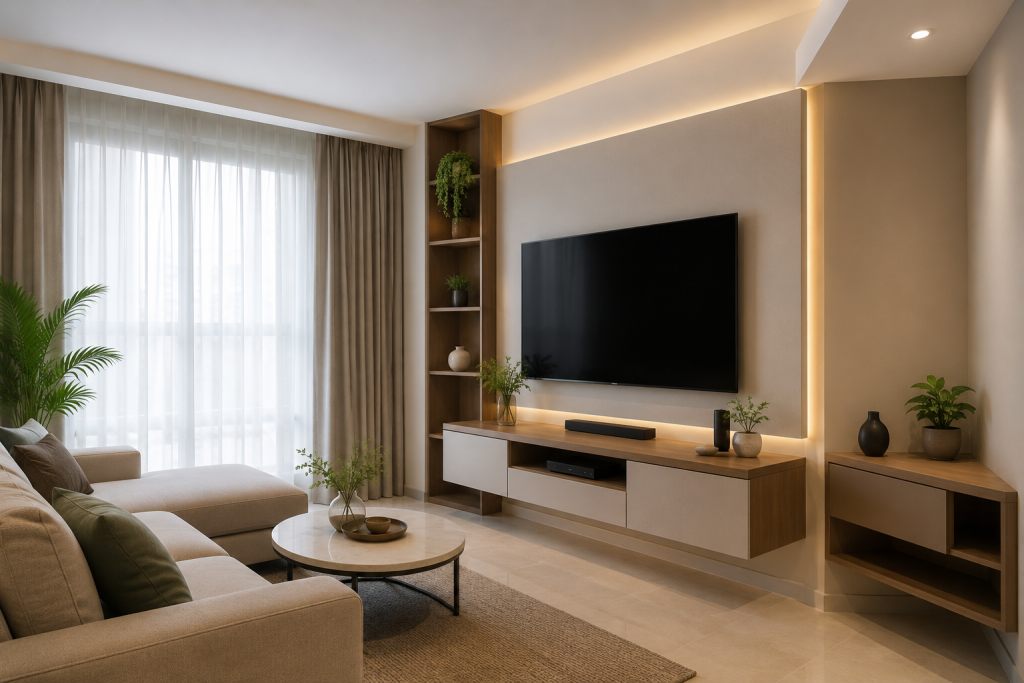
Corner television units are also useful in tighter layouts because they use areas that would otherwise remain awkward or empty.
Another thing that helps small living rooms is reducing unnecessary decoration around the television. Too many frames, shelves, or decorative objects can make the area feel crowded quickly.
Simple styling generally works better in compact homes.
The room should feel comfortable to sit in every day instead of looking overloaded with furniture.
Making The TV Area Feel More Organised
Even expensive TV setups start looking messy once wires, remotes, and accessories begin collecting around them.
Cable management alone changes the appearance of the room more than many people realise.
Hidden wire channels, closed storage sections, and organised shelving make the entertainment area feel calmer immediately. Once visible clutter disappears, the entire living room starts looking cleaner.
Décor should stay minimal around televisions.
A few books, plants, candles, or ceramics are usually enough. Too many decorative pieces compete for attention and make the space feel visually noisy.
Lighting also helps improve the atmosphere around the TV unit. Warm lamps placed nearby create a softer environment during evenings instead of relying only on harsh ceiling lights.
Comfort should remain part of the setup too.
The television height, seating distance, and viewing angles should feel natural during everyday use. Stylish furniture loses its value quickly if the room feels uncomfortable while actually watching television.
At the end of the day, the best TV cabinet designs are usually the ones that quietly support the room instead of dominating it. A setup that feels organised, balanced, and comfortable often leaves a stronger impression than something overly decorative.