

There’s a funny thing about a room that’s been sorted properly. You walk in, glance around, and something in your shoulders eases off. No one’s handing out medals for folded shirts or neatly stacked shoes, yet the mood shift is real. Across Australian homes, from compact city apartments to sun-soaked suburban houses, a well-ordered living space often does more than look nice. It changes how a place feels, and how people feel inside it.
That’s the psychology side of organisation, though it sounds far grander than it really is. At its core, it’s about the mind liking less fuss. When a room is calm, the brain has fewer little nudges pulling at its attention. The pile of papers on the dining table. The jumper draped over the chair. The toy box tipped sideways like it’s had a long week. Tiny things, yes, but they add up.
Why the brain loves a bit of order
People often talk about clutter as if it were purely a visual problem. It’s not. Clutter has a way of hanging around in the background of your mind, like a song you half remember and can’t quite shake. Even when you’re not thinking about it directly, you know it’s there. That little mental tug can make a home feel heavier than it needs to.
Order, on the other hand, brings a sense of predictability. The keys are where they’re meant to be. The winter coats aren’t stuffed under the spare bed. The hallway isn’t acting like a dumping ground for whatever came through the front door. That predictability matters, especially when daily life already has enough moving parts.
In many Australian households, space is at a premium in ways people don’t always expect. Inner-city terraces, unit living, family homes with growing kids, and the classic garage-that-has-become-a-storage-zone all have one thing in common: the need for smart organisation. When storage works properly, the home stops fighting back every time someone needs something.
Clutter and stress: a rather annoying pair
Clutter has a talent for making ordinary jobs feel bigger. Looking for a school bag becomes a treasure hunt. Finding matching socks turns into a minor crisis. And when the kitchen bench is covered in receipts, fruit bowls, reusable bags and yesterday’s mail, dinner starts feeling like a negotiation rather than a meal.
That’s where organised living spaces earn their keep. They reduce friction. Not in a dramatic, life-changing-in-one-afternoon sort of way, but in the quieter, more useful way that matters day after day. Less friction means fewer moments of irritation. Fewer moments of irritation mean less mental wear and tear.
There’s also the embarrassment factor, which people rarely admit out loud. When a home feels untidy, some folks stop inviting people over. “Sorry about the mess” becomes a permanent script. A space with proper storage can ease that pressure, and in a country where casual entertaining is part of the rhythm of life, that matters quite a bit.
Organisation and the feeling of control
One of the nicest parts of an organised home is the feeling that life is a bit more manageable. Not perfect, not polished to showroom standards, just manageable. There’s comfort in knowing where things live. That simple idea gives people a sense of control, and control tends to calm the nerves.
This is especially handy in family homes, where the day can go from peaceful to mildly chaotic in under five minutes. Someone is late for sport. Someone else has lost a shoe. There’s a lunchbox with suspicious contents in the sink. A home with good systems gives people a fighting chance.
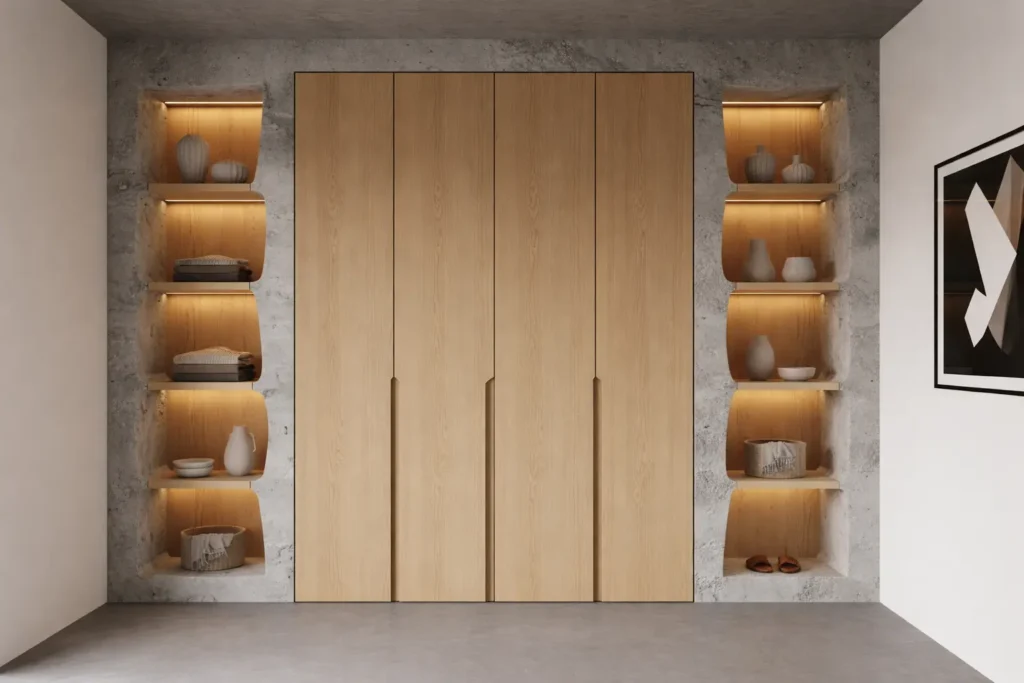
Storage solutions often make the biggest difference when they’re built around how people actually live. That is why some households choose built in wardrobes to keep clothing, shoes, and seasonal bits in one proper place rather than scattered across the room like a mini explosion of fabric and frustration.
Sleep, focus and a quieter mind
The bedroom deserves a mention, because it’s usually where people notice the effect of order most quickly. A room with too much visual noise can make it harder to wind down. A room that feels calm gives the brain permission to stop scanning for unfinished jobs.
That matters at the end of a long Australian day, especially in summer when the heat lingers and the house seems to hold onto it like a grudge. After work, school pickups, errands, and the usual round of “where did I put that?”, the last thing most people need is a bedroom that feels like a storage shed with a mattress.
Sleep and organisation get along rather well. A tidy room can encourage a better bedtime routine, and a better routine often leads to better rest. It’s not magic. It’s just easier to relax when the room isn’t shouting for attention.
Small wins that add up
- A bench that stays clear long enough to make breakfast without a shuffle.
- A wardrobe where jackets and shoes have their own place.
- A laundry where laundry actually feels possible.
- A child’s room that doesn’t turn into a daily scavenger hunt.
None of these sound glamorous. That’s probably the point. The best organisation is usually quiet about it.
How local lifestyles shape storage needs
Australian homes are a mixed bag, and storage has to keep up. In coastal towns, there’s surf gear, towels, hats, and sandy shoes. In colder regions, winter layers take over for a good chunk of the year. In the suburbs, there’s sports kit, school uniforms, work clothes, and all the odd bits that seem to breed in cupboards.
Regional life changes what a home needs to hold onto. A family in Perth may want clever ways to manage summer clothing and outdoor gear. A household in Melbourne might be juggling coats, boots, and layers that rotate with the weather. In Queensland, light fabrics and practical spaces may matter more, especially when humidity starts doing its own thing.
That’s why organised spaces feel so personal. They aren’t just about being tidy. They reflect how people actually live, which is a much more honest standard than trying to keep every room looking like a furniture catalogue. Most homes are working homes. They need to earn their place.
The emotional side of a neat home
There’s a kind of relief that comes with walking into a room and not feeling instantly behind on life. A tidy space can make people feel more capable, more settled, and a touch more generous with themselves. It also tends to help families interact a little better. Less hunting, less nagging, fewer arguments over who moved what.
Of course, no one is pretending a well-organised home will solve every problem. The bills still arrive. The dog still sheds. Teenagers still leave cups in mysterious places. But a calm environment can make the everyday messes less sharp around the edges.
And honestly, that’s plenty. A home that works smoothly is a small luxury, and in Australia, where home life often spills outdoors and back in again, that ease can make a real difference.
Why organised spaces feel more livable
At the end of the day, organisation is not about being rigid or fussy. It’s about making room for actual living. For the quiet cuppa. The rushed morning school run. The rainy Sunday when everyone is indoors pretending to be productive. The home doesn’t need to be flawless. It just needs to support the people in it without creating extra drama.
That’s the psychology in plain English. When the space is sorted, the mind often follows. Not instantly, not in some dramatic movie-style moment, but steadily. Calm breeds calm. Order reduces noise. And a room that has a proper place for everything tends to feel more welcoming than one where every surface is doing overtime.
For many Australian homes, that’s the real appeal of thoughtful storage. It’s not just about what fits where. It’s about how the whole place feels once the clutter stops calling the shots.