

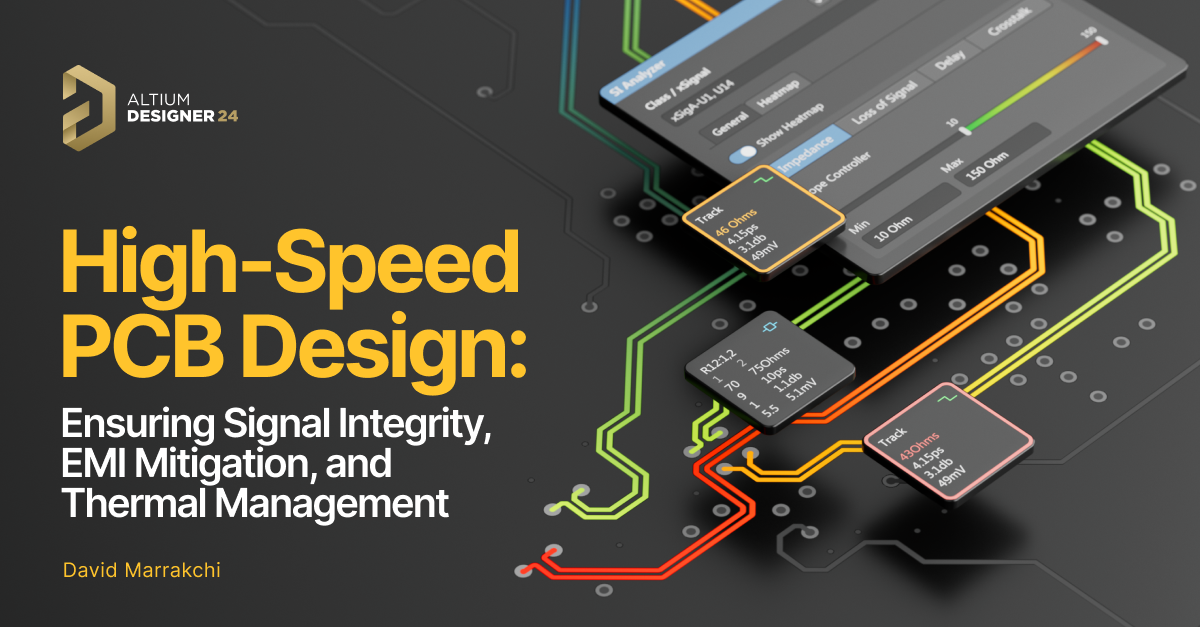
As electronic devices increasingly operate at multi-GHz frequencies, signal integrity (SI) emerges as a critical determinant of PCB performance. Modern high-speed applications, including VLSI circuits, advanced communication systems, and high-performance computing platforms, require that electrical signals maintain their shape, timing, and amplitude across the entire board. Even minor signal degradation, reflections, or crosstalk can lead to data errors, system instability, and costly redesigns. Advanced PCB engineering plays a pivotal role in ensuring that high-speed signals propagate without distortion, maintaining overall system reliability. By anticipating high-frequency effects during the design phase, engineers can achieve predictable performance and significantly reduce the likelihood of functional failures. Furthermore, boards designed with signal integrity in mind seamlessly support multi-GHz VLSI modules and high-speed interfaces, enabling smooth integration with advanced systems.
Addressing signal integrity from the conceptual stage ensures first-time-right results, making high-speed PCB design both efficient and dependable for modern electronic applications.
Key Signal Integrity Challenges in Multi-GHz PCB Design
High-frequency PCB design introduces several signal integrity challenges that engineers must anticipate and mitigate.
- Reflections and Impedance Mismatch:
Signal reflections occur when the trace impedance varies along its path, creating mismatches at critical points. These reflections generate echo signals that interfere with the primary signal, distorting waveforms. Such impedance variations can lead to timing errors, data corruption, and compromised overall PCB performance if not properly managed. - Crosstalk Between Traces:
Closely routed high-speed traces can couple electromagnetically, transferring unwanted energy between signals. This induced noise can disrupt adjacent signal paths, particularly affecting sensitive differential pairs. Left unchecked, crosstalk reduces signal fidelity, causing errors in high-speed data transmission. - Power and Ground Noise:
Fluctuations in the power supply or inconsistencies in the ground plane can create voltage variations across the board. These variations interfere with high-speed signal propagation, impacting timing and stability. Such noise can result in logic errors or intermittent performance issues if not mitigated. - Parasitic Effects of Vias and Connectors:
Vias introduce small discontinuities along signal paths, potentially reflecting high-speed signals. Connectors can add parasitic inductance or capacitance, further affecting waveform integrity. These parasitic elements must be considered to prevent signal distortion and maintain timing accuracy. - High-Frequency Losses:
At multi-GHz speeds, dielectric losses and the skin effect reduce the amplitude of transmitted signals. Trace geometry, material properties, and surface finish influence signal attenuation. Proper design and material selection are essential to minimize high-frequency losses and maintain signal integrity.
Understanding these challenges allows engineers to plan layouts that preemptively maintain signal quality.
Advanced Layout Strategies for Multi-GHz PCBs
Effective layout is pivotal in ensuring signal integrity for multi-GHz applications. The following strategies are critical:
- Controlled Impedance Routing:
Traces are designed with precise widths and spacings to match the target impedance across the PCB. This controlled approach minimizes reflections and ensures signal continuity. Consistent signal energy is maintained, which is critical for reliable high-speed performance. - Differential Pair Routing:
Routing high-speed signals as differential pairs enhances noise immunity by canceling common-mode interference. This method is essential for interfaces such as PCIe, DDR, and SerDes links. Proper differential routing ensures timing precision and maintains data integrity at multi-GHz speeds. - Layer Stack-Up Optimization:
Signal layers positioned adjacent to ground planes help confine electromagnetic fields and minimize EMI. Strategic stack-up planning ensures continuous return current paths for high-speed signals. This reduces radiated emissions and maintains signal fidelity across the PCB. - Via Management:
Back-drilled vias remove stubs that can cause reflections in high-speed traces. Limiting the number of vias in critical paths reduces discontinuities and preserves signal integrity. Effective management supports consistent propagation and minimizes timing errors. - Trace Length Matching:
Timing-critical signals in parallel buses are aligned to prevent skew and maintain synchronization. Matched trace lengths ensure that signals arrive simultaneously at their destinations. This technique preserves high-speed data integrity and reliable system operation.
These strategies, when applied methodically, result in boards that maintain high-speed signal fidelity under operational conditions.
Material Selection and Manufacturing Precision for Signal Integrity
Materials and manufacturing quality are as important as layout for multi-GHz PCB design.
- Low-Loss Laminates:
High-frequency signals achieve better performance using laminates like Rogers or Megtron, which provide stable dielectric constants. These materials minimize signal attenuation and reduce phase distortion over long trace lengths. Utilizing low-loss laminates ensures that multi-GHz signals maintain integrity and timing across the PCB. - Copper and Surface Finish Control:
Optimizing copper thickness and selecting smooth surface finishes enhances high-frequency signal propagation. Consistent copper quality prevents impedance variations that can distort signals. Proper control of these parameters is essential for maintaining high-speed signal fidelity. - Tight Manufacturing Tolerances:
Maintaining precise trace widths, spacing, and via dimensions ensures the PCB matches design specifications. Tight tolerances help preserve controlled impedance and prevent signal reflection. This consistency is critical for high-speed performance and first-time-right results. - Stack-Up and Lamination Accuracy:
Accurate lamination prevents board warpage and maintains uniform dielectric properties throughout the PCB. Proper stack-up ensures reliable signal return paths and reduces EMI. These factors support consistent performance in multi-GHz circuits over the product lifecycle. - Integration with High-Speed VLSI Systems:
Combining high-quality materials with precise manufacturing enables seamless integration with VLSI modules and complex high-speed interfaces. Optimized boards maintain signal integrity across diverse high-frequency applications. This alignment ensures reliable, high-performance operation in advanced electronic systems.
High-quality materials and exacting fabrication standards are essential for boards that need consistent performance at multi-GHz frequencies.
Conclusion:
High-speed PCB design at multi-GHz frequencies demands a comprehensive approach to signal integrity, encompassing layout, materials, simulation, and testing. Controlled impedance routing, differential pair management, precise layer stack-ups, and high-quality laminates collectively ensure reliable signal propagation. When integrated with advanced engineering, professional PCB layout service, and VLSI design principles, these strategies enable designers to achieve first-time-right results, reduce costly iterations, and deliver high-performance, multi-GHz electronic systems.
For organizations pursuing excellence in multi-GHz PCB design, Tessolve offers professional engineering expertise that ensures optimal signal integrity, maximizes system reliability, and streamlines development timelines. Their advanced solutions support high-performance electronic systems by addressing critical design challenges, minimizing errors, and enabling efficient integration with complex VLSI modules and high-speed interfaces. Connecting with Tessolve empowers companies to achieve first-time-right results while accelerating innovation in cutting-edge electronic applications.
