

When products arrive damaged, degraded, or past their usable window, the cost is rarely just the product itself. It extends into customer complaints, reorder cycles, storage rethinks, and sometimes regulatory scrutiny depending on the category. For businesses managing perishable goods, specialty foods, nutraceuticals, or any moisture-sensitive product, the packaging decision is an operational one, not just a procurement one. The difference between a product that holds for weeks and one that holds for months often comes down to barrier integrity, and the material used to achieve it.
Poly bags have been a default in many industries for decades. They are inexpensive, widely available, and functional across a broad range of uses. Mylar-based packaging has grown significantly in use as product categories become more sensitive and shelf-life expectations become longer. Understanding the actual difference between these two materials, not at a marketing level but at a structural and functional one, helps businesses make informed decisions about which format belongs in their operation.
What Mylar Packs Are and Why They Perform Differently
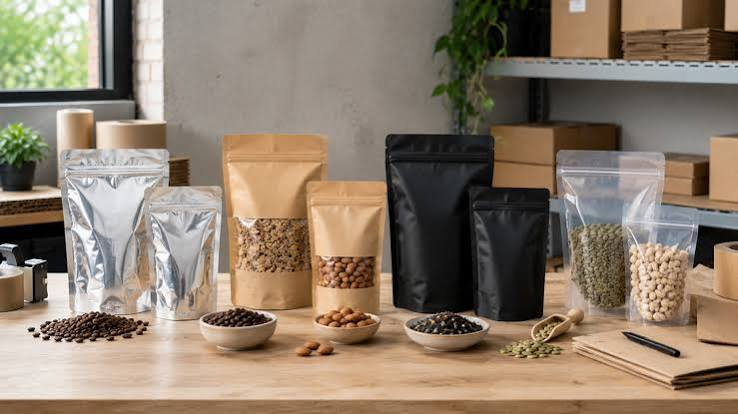
Mylar is a brand name for a type of polyester film, specifically biaxially-oriented polyethylene terephthalate, commonly known as BoPET. When used in packaging, this film is typically laminated with additional layers, including aluminum foil, to create a multi-layer barrier structure. The result is a flexible pouch that resists oxygen, moisture, light, and odor transmission at levels that standard polyethylene cannot approach. These mylar packs are used across food storage, pharmaceuticals, electronics, and specialty retail precisely because of that barrier performance.
The laminated construction is what separates mylar-based formats from single-layer flexible packaging. Each layer in a mylar structure serves a distinct function: one layer handles structural integrity, another provides the oxygen and moisture barrier, and the innermost layer is typically food-safe and heat-sealable. This is fundamentally different from how a poly bag is made, and those structural differences translate directly into real performance differences under storage conditions.
For businesses looking at shelf-life performance in a rigorous way, the category of mylar packs represents a well-established solution with documented use in long-term food storage, military rations, and pharmaceutical packaging, where product integrity is not optional.
How the Barrier Layer Changes the Outcome
Oxygen is the primary driver of degradation in most perishable products. It accelerates oxidation in fats and oils, supports microbial growth, and breaks down the volatile compounds that give products their flavor, aroma, and nutritional value. A packaging material’s ability to limit oxygen transmission over time is one of the most meaningful measures of how well it preserves product freshness.
Mylar-based packaging with an aluminum foil layer creates what is effectively a near-complete oxygen barrier. Aluminum does not allow gas to pass through at any meaningful rate under normal conditions. This is why mylar-structured pouches are trusted for products that need to remain stable over extended storage periods without refrigeration. Poly bags, even high-density variants, are permeable to oxygen and moisture to a degree that becomes significant over weeks, and increasingly significant over months.
Light Exposure as an Overlooked Freshness Factor
Light degradation, or photodegradation, affects a wide range of products including oils, dried herbs, vitamins, and certain specialty ingredients. Ultraviolet and visible light accelerate the same oxidative processes that oxygen drives, and clear or semi-transparent packaging does nothing to interrupt this pathway. Many products stored in poly bags and exposed to ambient retail or warehouse lighting lose quality not just from air exposure but from ongoing light contact throughout their storage life.
The aluminum layer in mylar-structured packaging blocks light completely. This is not a secondary benefit. For categories like dried botanicals, nutritional supplements, or light-sensitive ingredients, the light barrier is as important as the oxygen barrier. Products packaged in opaque mylar formats are protected from two simultaneous degradation pathways, which compounds the shelf-life advantage considerably.
Where Poly Bags Remain a Practical Choice
Poly bags are not a flawed product in the wrong context. They are a well-suited format for applications where the storage window is short, the product is not sensitive to moisture or oxygen at meaningful levels, or where breathability is actually a functional requirement. Fresh produce, for example, often performs better in perforated or breathable poly because a complete oxygen barrier would create anaerobic conditions that cause spoilage of a different kind.
For businesses running high-volume, short-cycle distribution, the cost-per-unit difference between poly and mylar can be a legitimate factor. If a product moves from packing to consumer use within a few days, the barrier performance of mylar is not extracting its value. The packaging decision should follow the product’s actual needs, not a default assumption that higher barrier always means better outcome.
The Risk of Applying Poly Logic to Long-Storage Products
Where poly bags create operational problems is when they are applied to products that genuinely need barrier protection but are managed as if they do not. This happens frequently in categories where businesses migrate from short-cycle retail into longer-shelf e-commerce models, or when a product line expands to include more sensitive formulations. The packaging specification that worked for a distribution model built around rapid turnover begins to fail when the same product sits in a fulfillment center for several weeks before reaching the end user.
The degradation in these cases is often gradual enough to be difficult to attribute clearly. Product returns and complaints may reference stale taste, reduced potency, or off-odor without identifying the root cause as packaging permeability. By the time the pattern is identified, the business has absorbed both the customer experience damage and the material cost of the returned stock. Changing to an appropriate barrier format earlier avoids this cycle entirely.
Seal Integrity and Its Role in Real-World Performance
A packaging format is only as effective as its seal. Barrier film that is improperly sealed is functionally similar to film with a hole in it. The seal zone is where oxygen, moisture, and contaminants find their way into an otherwise protected package, and it is where most packaging failures in field conditions originate.
Mylar-structured pouches are heat-sealed, and the process creates a bond between the inner layers that, when executed correctly, maintains barrier continuity across the entire package. This is not unique to mylar, but the combination of high barrier film and a reliable heat seal closure is what allows the format to deliver on its protective potential in practice, not just in controlled testing environments. As noted by the U.S. Food and Drug Administration, packaging integrity is a fundamental element of food safety and shelf-life compliance, not a secondary specification.
Seal Failure Patterns Businesses Should Recognize
Seal failures in flexible packaging tend to follow recognizable patterns. Contamination of the seal area by product residue during filling is one of the most common causes. When powder, oil, or particulate matter contacts the seal zone before closure, the bond is compromised without being visually obvious from the outside. This is a process issue, not a material one, but it affects both poly and mylar formats. The difference is that a seal failure in a high-barrier pouch eliminates the performance advantage entirely, so process discipline around fill and seal becomes more consequential when the material itself is capable of high performance.
Thermal calibration of sealing equipment matters as well. Sealing temperatures that are too low produce weak bonds. Temperatures that are too high can damage the film and reduce barrier performance at the seal zone. Businesses transitioning from poly to mylar-structured formats sometimes encounter this learning curve because the optimal sealing parameters are different between material types, and the consequences of deviation are more pronounced.
Making the Decision Based on Product Requirements, Not Defaults
The choice between mylar-based packaging and poly bags should start with a clear understanding of the product’s actual degradation pathways. What causes this product to lose quality over time? Is it oxygen exposure, moisture pickup, light contact, or a combination? Over what timeframe does the product need to remain in acceptable condition? Under what storage conditions, temperature and humidity, will it be held before reaching the end user?
Products with sensitive fats, volatile aromatic compounds, or active ingredients that degrade in the presence of oxygen are candidates for high-barrier packaging regardless of their size or price point. Products with high moisture content that need to breathe or that cycle quickly through distribution chains are often better served by poly formats. The mistake businesses make most often is treating packaging as a cost category to minimize rather than a functional specification with real downstream consequences for product quality and customer experience.
Conclusion
The comparison between mylar packs and poly bags is not one where a single format wins universally. Both materials serve real purposes in different operational contexts. What matters is matching the packaging specification to the product’s actual requirements and the conditions it will face between production and end use.
For products where oxygen, moisture, and light exposure pose a genuine risk to freshness and shelf stability, mylar-structured packaging offers measurable, structural advantages that poly bags cannot replicate. For short-cycle, lower-sensitivity products, poly remains a practical and cost-appropriate option. The businesses that run into problems are those that apply one format broadly across a product range without evaluating whether its protective capabilities align with what the product actually needs. Getting that evaluation right, early in a product launch or during a distribution model change, is what keeps quality consistent and avoids the compounding costs of degraded product reaching customers.
