

Space stories often arrive with rockets and explosions, but this one is about patience. No spacecraft was launched and nothing dramatic changed around Saturn overnight; what changed was our knowledge, after years of faint images were checked, rechecked and finally accepted as a new and much longer census of moons.
How the new moons were confirmed
Saturn’s family has grown again, with 128 new moons confirmed and a new overall total of 274 now recognised. Researchers traced the faint objects through observations gathered by the Canada-France-Hawaii Telescope. Much of the work was led by researchers connected with the University of British Columbia. A speck of light is not enough on its own, so every candidate needed repeated observations to prove its orbit. The International Astronomical Union’s recognition is what turns a promising detection into a counted moon.
Why such faint moons stayed hidden
The new moons are generally modest in size, and their faintness explains why they escaped notice for so long. By aligning successive images, the survey can separate genuine companions from asteroids and background stars. Such work is slow because the objects are faint, their orbits are wide, and poor weather can break the trail. Because confirmations are batched after years of checking, the total can jump sharply in one announcement.
Readers who want the institutional background can explore the University of British Columbia, whose researchers contributed to the survey work. Their involvement is a reminder that modern astronomy is collaborative, combining telescope time, data analysis and international confirmation processes rather than resting on a single observer or a single night of clear skies.
What the record means for planetary science
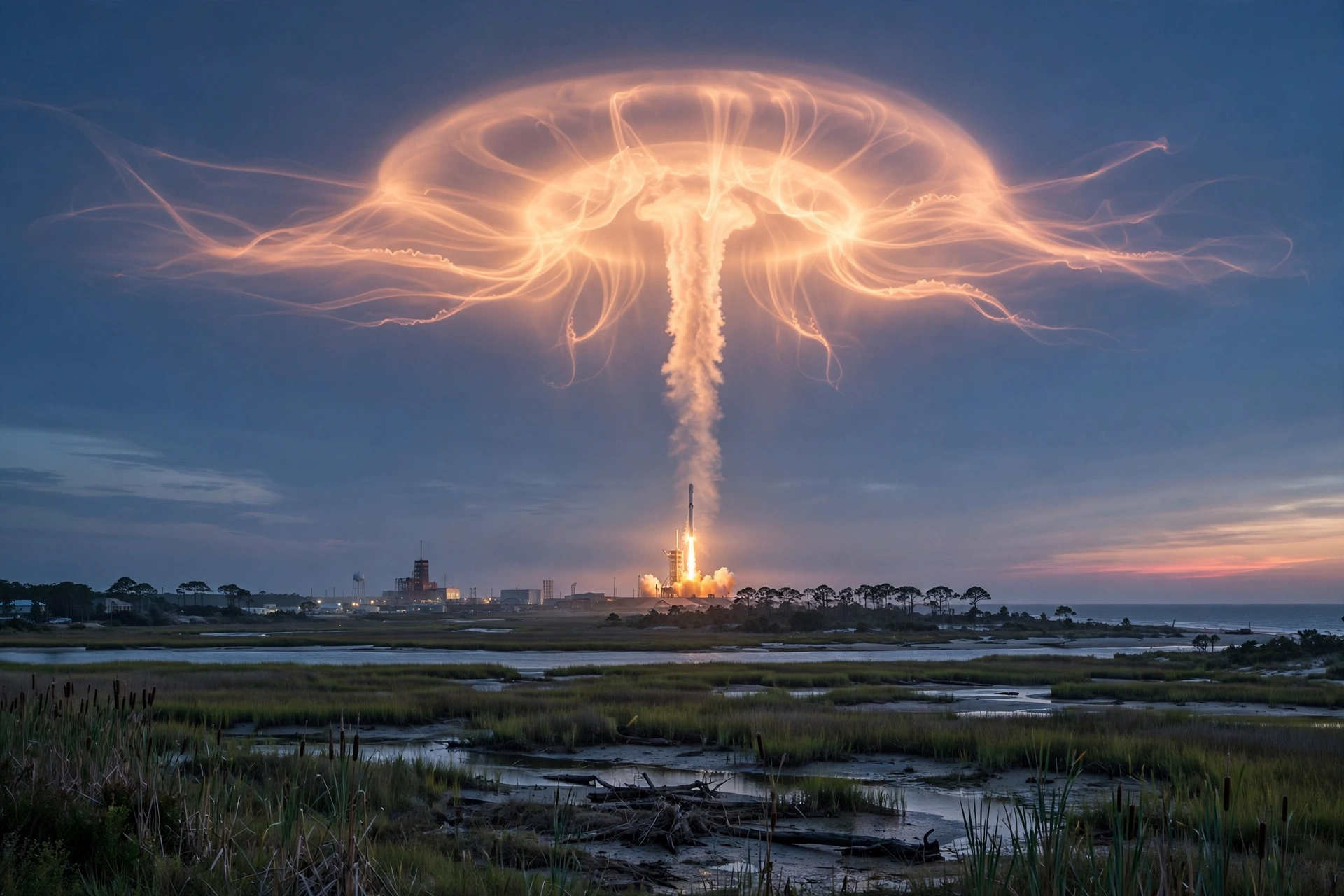
No other planet comes close at present, and 274 underlines how dominant Saturn is in this particular league table. For planetary scientists, the value lies in what these fragments reveal about Saturn’s past and the young solar system. Some families of moons may be debris from larger bodies that broke apart after collisions. Sharper instruments are likely to push the census further, so 274 should be read as a milestone rather than an end point. We explored a related theme in our report on the recent SpaceX launch spectacle, and the contrast is instructive: whether the subject is computing power or celestial mechanics, scale changes the questions researchers have to ask.
Cataloguing a crowded system
Cataloguing is not finished at announcement; orbits must be refined and designations assigned in an orderly way. Good records are the difference between a growing catalogue and a muddle of duplicate claims. Amateur astronomers are unlikely to see these moons directly, because most require professional telescopes and long exposures. Archived images may already contain some of these moons, unnoticed at the time they were taken. Computation did not replace the telescope; it made the telescope’s harvest far more productive.
Why the small moons matter alongside the great ones
The headline total should not distract from the major moons, whose oceans, atmospheres and geology remain prime research targets. Saturn hosts both ocean-bearing moons and mere fragments, and any full account of the planet has to include both extremes. Understanding how those pieces fit together helps scientists model how giant planets gather material as they form. Stories like this connect laboratory-style research to an object anyone can locate on a clear night, which is a rare and valuable link.
For students encountering Saturn for the first time, the new total offers a useful way into several subjects at once. Gravity explains the orbits, optics explains the detections, computing explains the analysis, and geology may eventually explain the fragments themselves. Few single announcements touch that many disciplines so naturally, which is part of why teachers and science communicators have seized on the figure, and why the number 274 is likely to appear in lessons and textbooks long after the original survey papers have been superseded by still deeper searches.
Expect the number to be quoted in classrooms and quizzes for years, even if future surveys eventually revise it upwards once again.
