

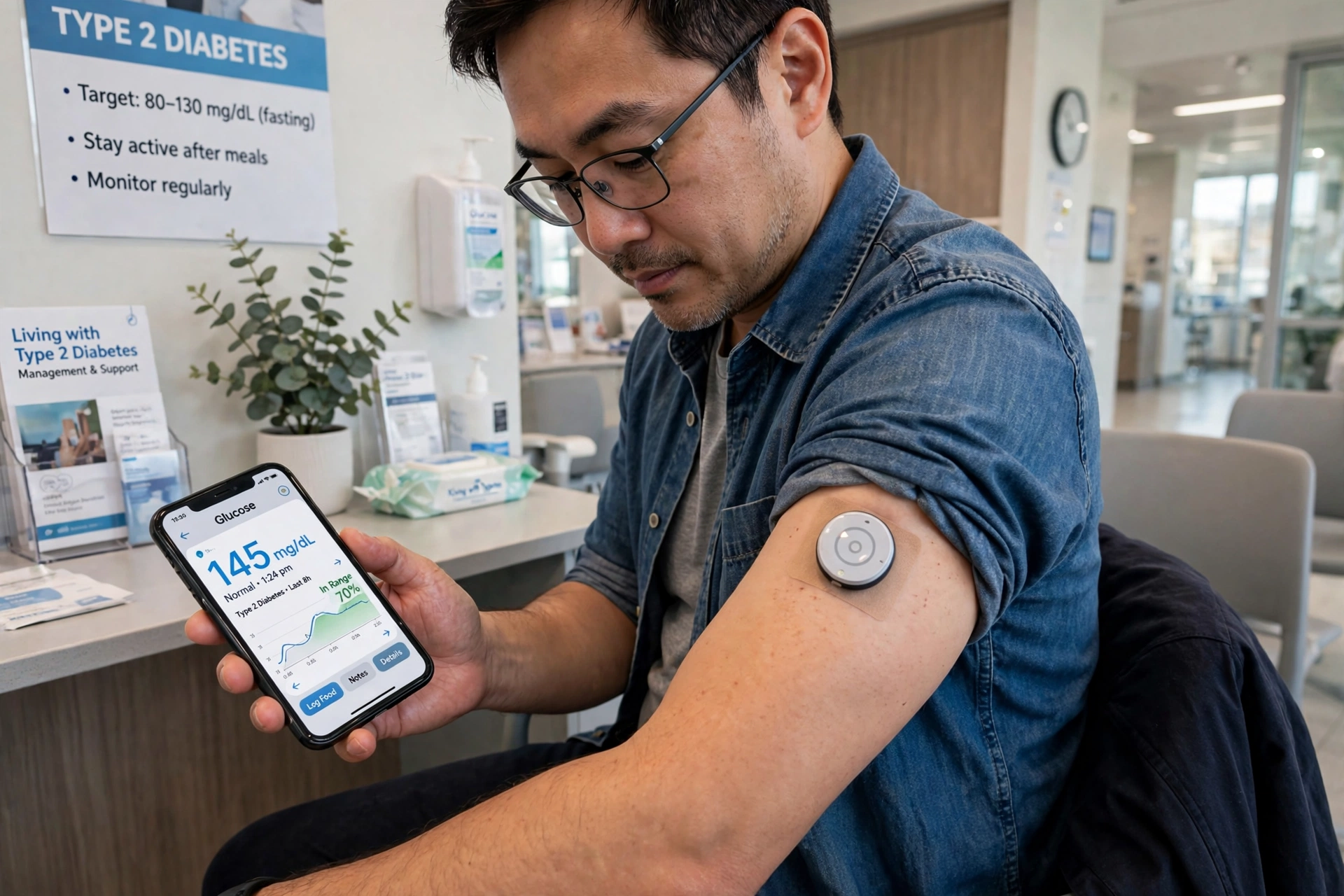
Continuous glucose monitors, the small wearable sensors that track blood sugar around the clock, could help millions of adults with type 2 diabetes who do not use insulin, according to the largest clinical trial of its kind. The study, published in the New England Journal of Medicine, found that people who used a monitor spent approximately five more hours each day within their target blood sugar range than those relying on standard care.
What the trial found
Researchers followed adults whose type 2 diabetes was managed without insulin, a group that has historically had limited access to glucose monitoring technology. Participants wearing a continuous glucose monitor could see their readings in real time, along with trends showing whether levels were rising or falling. That constant feedback changed behaviour in small but powerful ways: a short walk after a meal, a smaller portion at the next one, or a medication taken exactly on time.
According to the University of Colorado Anschutz report on the findings, the improvement amounted to roughly five additional hours a day in the healthy target range — a difference that, sustained over months and years, can meaningfully reduce the strain diabetes places on the heart, kidneys, eyes and nerves.
Why “time in range” matters
Diabetes care has traditionally centred on HbA1c, a blood test that gives an average glucose level over about three months. Averages, however, can hide dangerous daily swings between highs and lows. Clinicians increasingly use “time in range” — the share of the day spent within a healthy glucose band — because it captures those swings and connects directly to how a patient feels and functions each day.
Five extra hours in range is therefore more than a neat statistic. It can mean steadier energy, fewer symptoms, and a lower long-term risk of complications. It also gives patients and doctors a shared, understandable target, in the same way that step counts and sleep scores have made other areas of health easier to discuss. Our look at modern wearable health and fitness technology shows how continuous data is reshaping everyday care.
Technology moving from insulin users to everyone else
Continuous glucose monitors were first adopted by people with type 1 diabetes and those with type 2 diabetes who use insulin, where the risk of sudden low blood sugar makes constant monitoring essential. Extending the technology to the much larger group who manage the condition with diet, activity and oral medication has been slower, partly because of cost and insurance coverage, and partly because solid trial evidence was missing.
This study helps fill that gap. Its scale and publication in a leading journal strengthen the case that monitoring is not only for the most intensive treatment plans. Technology is already changing appointments themselves, as our article on the role technology plays in your doctor’s appointment explains, and glucose data shared directly with care teams is one of the clearest examples.
What patients should consider
A monitor is a tool, not a treatment on its own. The trial’s benefits came from what people did with the information: adjusting meals, moving more, and working with clinicians to fine-tune medication. Sensors also cost money, need replacing every ten to fourteen days, and can cause mild skin irritation or alarm fatigue if alerts are not set sensibly. Anyone interested should discuss coverage and suitability with their doctor or diabetes care team, and check guidance from organisations such as the American Diabetes Association.
The bigger picture
Type 2 diabetes affects hundreds of millions of people worldwide, and its complications account for a large share of healthcare spending. Interventions that help patients stay in range for longer each day, without adding injections or complex routines, are therefore valuable well beyond the individuals in this trial. If insurers and health systems act on the evidence, the small sensor on the back of an arm could become as ordinary a part of diabetes care as the blood pressure cuff — and five healthier hours a day could become the new normal for millions of people.
