

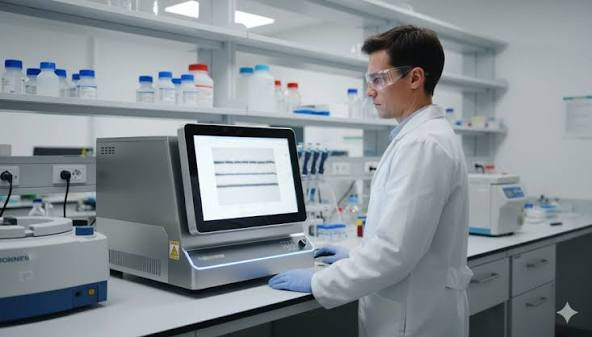
Cell imaging has always sat at the intersection of biology and instrumentation. For decades, researchers depended on manual microscopy, skilled technicians, and protocols that varied subtly from one operator to the next. That variability introduced quiet problems — inconsistent data, reproducibility gaps, and bottlenecks that slowed downstream analysis. As throughput demands in drug discovery, cell biology, and translational research have grown, so has the need for systems that can capture, process, and quantify cellular data reliably across large experimental runs without constant human intervention.
An automated cell imaging system addresses these needs by combining optics, motorized stages, digital capture, and integrated software into a single platform that operates with minimal manual input. But choosing the right system is not straightforward. The market includes instruments designed for very different applications, throughput levels, and institutional settings. A platform suited for a pharmaceutical screening department may be entirely impractical for an academic core facility. This guide is intended to help researchers and procurement decision-makers think clearly about what actually matters when evaluating these systems — before committing significant capital resources.
Understanding What an Automated Cell Imaging System Actually Does
At its core, an automated cell imaging system replaces or reduces the manual steps involved in positioning samples, focusing, capturing images, and applying consistent measurement criteria. Rather than relying on a researcher to physically adjust a microscope stage, evaluate image quality in real time, and manually record observations, these platforms perform those tasks systematically across entire multi-well plates or slides. The result is a standardized data acquisition process that removes a significant layer of operator-dependent variability from the experimental workflow.
For teams evaluating their options, a practical starting point is reviewing an Automated Cell Imaging System overview that outlines how these platforms differ in design, function, and intended application. Understanding these distinctions early prevents teams from over-specifying or under-specifying based on assumptions rather than actual workflow requirements.
Beyond image capture, modern platforms integrate analysis pipelines that classify cells, measure morphological features, detect fluorescent signals across multiple channels, and generate quantitative output — all within the same software environment. This integration matters because it determines how quickly results become actionable and how reliably those results can be reproduced across experiments and over time.
The Role of Hardware and Software Integration
One of the more consequential differences between imaging platforms is how tightly the hardware and software components are integrated. Some systems are designed as closed platforms where the manufacturer controls both the optics and the analysis environment. Others use modular or open architectures that allow researchers to pair hardware with third-party or custom analysis software.
Closed systems typically offer a smoother user experience, validated workflows, and faster implementation. The tradeoff is flexibility. If a research program evolves to require assay types or analysis methods that fall outside the platform’s native capabilities, adaptation becomes difficult. Open or semi-open systems require more internal expertise to configure properly but offer greater adaptability over the long term. This is a genuine operational consideration, not a theoretical one — research priorities shift, and the imaging infrastructure needs to accommodate that without requiring full equipment replacement.
Matching System Capabilities to Research Requirements
The most common purchasing mistake in life science instrumentation is selecting a system based on its maximum capabilities rather than its fit with actual, day-to-day experimental needs. High-content imaging platforms capable of capturing and analyzing dozens of parameters per cell are genuinely powerful tools, but they require sustained informatics support, substantial storage infrastructure, and considerable operator training to function effectively. For a team whose primary need is live-cell kinetic monitoring or basic phenotypic screening, that level of complexity adds friction without proportional benefit.
Before evaluating specific products, it is worth documenting the research program’s actual imaging needs across three dimensions: the biological questions being asked, the throughput expectations, and the level of analytical sophistication required. These three factors, taken together, define the functional envelope within which a system needs to operate reliably.
Throughput Considerations and Experimental Scale
Throughput is often discussed in terms of how many wells or samples a system can process per hour. While that framing is useful, it is not sufficient on its own. What matters more is how consistently a system maintains image quality across the full duration of a run — particularly for experiments involving hundreds of wells acquired over several hours. Autofocus performance, temperature stability for live-cell applications, and the reliability of the motorized stage all affect data integrity in ways that raw speed figures do not capture.
Researchers running primary screens in drug discovery settings have different throughput requirements than those conducting secondary validation or mechanistic studies. A system selected for screening throughput may be unnecessarily complex for confirmation work, while a simpler platform optimized for flexibility may create bottlenecks in high-volume workflows. Matching the system’s throughput architecture to the actual experimental cadence of the lab reduces both operational friction and wasted capacity.
Fluorescence Channels and Multiplexing Requirements
Fluorescence-based imaging is central to most modern cell biology applications, and the number and quality of available imaging channels significantly affects what experiments are feasible on a given platform. Systems with a limited channel configuration may be entirely sufficient for straightforward assays involving one or two markers. However, as assays become more complex — particularly in areas like immunofluorescence, co-localization studies, or multiplexed pathway analysis — the ability to image several spectrally distinct fluorophores simultaneously or sequentially becomes important.
Channel availability is not the only relevant factor. Spectral crosstalk between channels, the sensitivity of individual detectors, and how the software handles multi-channel image merging and background correction all influence data quality. It is worth testing a prospective system with the actual fluorophores and assay formats used in the lab, rather than relying on manufacturer-supplied performance data generated under idealized conditions.
Evaluating Software and Data Management Infrastructure
The analysis software bundled with an automated cell imaging system is frequently underweighted in purchasing decisions, even though it directly determines what researchers can do with the data they collect. Image acquisition is only part of the workflow. The ability to define robust, reproducible analysis pipelines — and to apply them consistently across experiments conducted days, weeks, or months apart — is what transforms raw images into reliable scientific conclusions.
Software capability varies considerably across platforms. Some offer pre-built assay templates that allow non-expert users to begin analyzing data quickly. Others provide scripting environments or machine learning tools for building custom classifiers. The right choice depends on the team’s informatics expertise and the analytical complexity of their experiments. A system with highly sophisticated software that requires dedicated bioinformatics support to operate is not an asset if that support is unavailable.
Data Storage, Export, and Compatibility
High-content imaging generates large datasets. A single multi-well plate experiment can produce gigabytes of image data, and the analysis outputs — cell-level measurements, population statistics, image metadata — add further volume. Before purchasing any platform, it is worth understanding how image data is stored, in what format it is exported, and how compatible those formats are with downstream tools the team currently uses.
Proprietary file formats that require the manufacturer’s software to read can create long-term dependencies that complicate data sharing, publication, and archiving. The Open Microscopy Environment has developed community standards for biological image data that support interoperability across platforms, and some systems now offer compatibility with these standards. Whether or not that matters in a given institutional context depends on how data is managed and shared, but it is worth investigating during evaluation.
Practical Factors That Affect Long-Term Usability
Instrument performance at the point of purchase is important, but it is not the only factor that determines whether a system becomes a productive part of a laboratory’s infrastructure. Long-term usability depends on how reliably the system performs over time, how quickly issues are resolved when they arise, and how well the platform adapts as research needs evolve.
Service agreements, response times for technical support, and the availability of spare parts and calibration standards all affect operational continuity in ways that are easy to overlook during the procurement process. A system that performs well when new but is difficult to maintain or service represents a real operational risk, particularly in settings where imaging data drives decisions further along an experimental pipeline.
Training Requirements and Operator Independence
Complex instrumentation benefits from well-trained users, and the depth of training required to operate a given platform competently varies significantly. Some systems are designed with ease of use as a primary consideration, allowing researchers with limited imaging experience to run standardized assays reliably. Others require specialized training in optics, image analysis, or software configuration before the platform can be used effectively.
In core facility environments, where a single instrument serves a diverse user base with varying levels of expertise, ease of use and reproducibility across operators matter more than maximum analytical flexibility. In specialized research groups where a small number of expert users will manage the platform, a steeper learning curve may be acceptable in exchange for greater analytical depth.
Concluding Perspective: Grounding the Decision in Operational Reality
Choosing an automated cell imaging system is ultimately a decision about workflow fit, not just technical specification. The systems available today span a wide range of capabilities, price points, and operational models. Some are built for throughput-intensive screening environments; others are optimized for flexibility or ease of use in mixed-expertise settings. None of them is universally superior — each reflects a set of design tradeoffs that make it more or less suitable for specific research contexts.
The most durable purchasing decisions in this category share a common characteristic: they are grounded in an honest assessment of current and near-term experimental needs rather than aspirational capability targets. Overpowered systems that exceed a lab’s actual requirements introduce unnecessary complexity and cost. Underpowered systems become bottlenecks and eventually require replacement. The objective is alignment between the platform’s functional strengths and the real demands of the research program it will serve.
Before finalizing any decision, it is worth running prospective systems against representative assays using actual samples from the lab’s current work. Controlled evaluations of this kind surface real operational differences that specifications and demonstrations rarely reveal. Combined with a clear understanding of software capability, data management requirements, and service infrastructure, that hands-on assessment provides a solid foundation for a decision that will hold up over the operational life of the instrument.
