

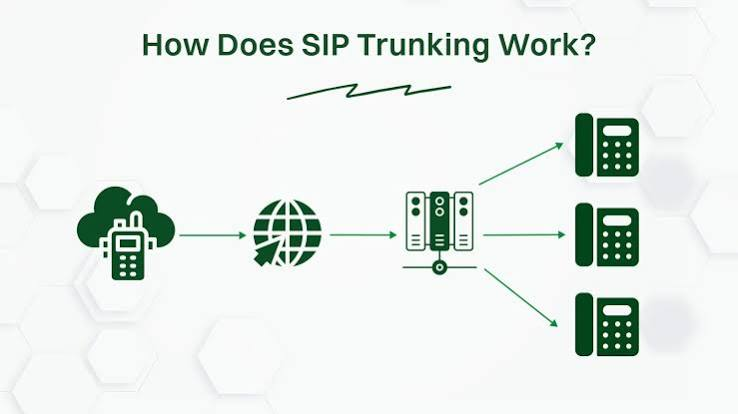
When businesses move their phone infrastructure to SIP trunking, the initial appeal is straightforward: lower costs, more flexibility, and fewer physical hardware dependencies. The technology itself is mature and widely adopted across industries ranging from logistics and healthcare to professional services and manufacturing. Yet a significant number of organizations that make this transition experience problems they did not anticipate — dropped calls, routing failures, poor call quality, and billing discrepancies that take weeks to trace.
The frustrating part is that these failures rarely stem from the SIP trunking service itself. The underlying protocol is stable and well-documented. What breaks down, in most cases, is the management layer between the trunk and the rest of the business’s communication infrastructure. Without dedicated oversight of how calls are routed, authenticated, prioritized, and monitored, even a technically sound SIP deployment can behave unpredictably under real-world conditions.
This is not a niche problem. It affects small businesses running a handful of lines just as readily as mid-sized enterprises handling hundreds of concurrent calls. The difference is scale and the speed at which the consequences become visible.
What a SIP Trunk Call Manager Actually Does
A sip trunk call manager is a dedicated system — either hardware-based, software-based, or cloud-hosted — that sits between a business’s SIP trunk provider and its internal phone environment. Its function is to govern call behavior: how incoming calls are received, how outgoing calls are authorized, how traffic is balanced across available channels, and how exceptions are handled when something goes wrong. Rather than leaving these decisions to default configurations or manual intervention, a call manager applies structured, consistent logic to every call event.
This matters because SIP trunks are not passive conduits. They respond to instructions, and without a system providing coherent instructions, the trunk defaults to basic behavior that may not align with how a business actually operates. A company with multiple departments, remote workers, and variable call volumes needs something more than a basic dial plan to keep communications functioning reliably. A proper sip trunk call manager fills that gap by providing a governance layer that reflects how the organization actually uses its phones.
The Role of Call Routing Logic in Operational Stability
Routing is where most SIP deployments begin to show cracks. In a straightforward setup, calls arrive, ring at a destination, and either connect or go to voicemail. But in practice, business call routing involves conditions: time-of-day rules, overflow queues, failover paths, geographic restrictions, and department-specific handling. When these conditions are not encoded into a call manager, they either do not exist or they are implemented inconsistently across individual devices and extensions.
The result is unpredictable behavior. A call that should route to an after-hours answering service instead rings at an empty desk. A call to a main business number fails because the primary path is congested and there is no fallback. A customer reaching out during peak hours is dropped mid-transfer because the handoff logic was never defined. These are not hypothetical scenarios — they are common reports from businesses that deployed SIP trunking without a centralized management system in place.
When routing logic lives in a dedicated call manager rather than being distributed across individual endpoints, it becomes auditable, consistent, and adjustable. Changes can be made once and applied everywhere, rather than being tracked down across a dozen devices with varying firmware versions.
Why Default SIP Configurations Create Hidden Risk
Most SIP trunk providers deliver a functional connection out of the box. Authentication is established, codecs are negotiated, and calls can technically be placed and received. This initial functionality gives many businesses a false sense that the setup is complete. What has actually been delivered is a working connection, not a managed communication system.
Default SIP configurations are designed for compatibility, not operational sophistication. They make assumptions about network conditions, call volumes, and user behavior that may not match a real business environment. When those assumptions fail — because a network spike degrades voice quality, because a security scanner triggers excessive authentication attempts, or because a trunk channel limit is hit during a busy period — there is no management layer to respond. The failure simply propagates.
Security Gaps in Unmanaged SIP Environments
SIP fraud is a documented and ongoing problem across business telephony. Attackers probe SIP endpoints for weak authentication, then use discovered credentials to place large volumes of international or premium-rate calls at the account holder’s expense. According to the Federal Communications Commission, businesses have incurred substantial financial losses from unauthorized use of their telephone systems, and SIP-based infrastructure is among the most commonly exploited entry points.
An unmanaged SIP trunk has no built-in mechanism to detect unusual call patterns, restrict outbound dialing by destination or time, or flag authentication anomalies in real time. A sip trunk call manager addresses this by providing enforceable rules around what calls are permitted, from where, and under what conditions. It does not eliminate all risk, but it creates a boundary that automated attacks are far less likely to cross undetected.
Quality Degradation Without Traffic Oversight
Voice over IP calls are sensitive to network conditions in ways that data applications are not. A file download that experiences latency is delayed. A voice call that experiences the same latency becomes choppy or unintelligible. Without a call manager monitoring and prioritizing voice traffic, SIP calls compete with other network activity on equal terms, which means quality varies based on whatever else is happening on the network at any given moment.
This shows up in practice as calls that sound fine in the morning and degrade by afternoon when other systems are more active. It shows up as complaints from remote workers whose home connections handle video streaming fine but cannot maintain consistent voice quality. A call manager that applies quality-of-service policies to SIP traffic ensures voice calls receive the consistent treatment they require, rather than being subject to the whims of general network conditions.
The Operational Consequences of Skipping This Layer
Businesses that deploy SIP trunking without dedicated call management often do not recognize the management gap as the source of their problems. What they notice instead are symptoms: customer complaints about call quality, staff frustration with dropped transfers, billing surprises at the end of the month, and periodic outages that cannot be easily traced to a specific cause. Each symptom is addressed individually — a device is rebooted, a setting is adjusted, a ticket is opened with the provider — without recognizing that all of these issues share a common root.
The cost of this reactive approach accumulates in ways that are easy to underestimate. Staff time spent troubleshooting call issues is time not spent on primary work. Customer calls that do not connect or connect poorly affect trust and retention in ways that do not appear on a phone bill. Fraud losses from an unprotected trunk can arrive as a single large charge before any pattern is detected. These outcomes are not dramatic failures that trigger immediate review — they are gradual erosions that are easy to normalize until they become significant.
How Management Failures Compound Over Time
A SIP environment without centralized management tends to drift. Individual configurations are adjusted at the device level to solve immediate problems, but these adjustments create inconsistencies across the system. One extension handles call transfers differently than another. One location has stricter codec settings than others, causing quality mismatches on internal calls. Over time, the environment becomes difficult to audit, document, or hand off to a new IT staff member or provider.
This accumulated complexity is a liability. When something breaks in an environment where configurations are scattered and undocumented, the time to identify and resolve the issue is longer than it should be. When a business wants to add locations, integrate new phone features, or switch providers, the lack of a clean management layer makes those transitions significantly more difficult and expensive.
Fixing the Problem: What a Structured Approach Looks Like
Addressing the management gap in a SIP deployment does not require replacing existing infrastructure. In many cases, a sip trunk call manager can be introduced into an existing environment without disrupting current operations. The process begins with an honest inventory of how calls are currently being handled — what routing rules exist, where they live, which configurations are documented, and which are assumed.
From that baseline, a call manager can be configured to formalize what is currently informal: encoding routing logic into enforceable rules, establishing authentication standards, setting call volume thresholds, and defining failover behavior. The goal is not to add technology for its own sake but to make the existing SIP investment behave consistently under all conditions.
Ongoing Monitoring as a Standard Practice
A call manager’s value is not limited to initial configuration. Its ongoing contribution is visibility. Knowing how many calls are being placed, where they are going, how long they last, and whether any anomalies are occurring is information that an unmanaged SIP environment simply does not provide. With that visibility, issues can be identified before they affect users rather than after complaints accumulate.
Monitoring also supports cost management. When outbound call patterns are tracked, unexpected spikes are visible immediately. When trunk channels are being used inefficiently, that shows up in usage data. A business using a sip trunk call manager has the information it needs to make decisions about capacity, routing, and configuration based on actual behavior rather than estimates.
Closing Thoughts
SIP trunking is a sound technology choice for businesses that want reliable, cost-effective voice communication. But the technology does not manage itself. The gap between a working SIP connection and a well-functioning business phone system is filled by dedicated call management — the layer that applies logic, enforces policy, provides visibility, and handles exceptions without requiring manual intervention every time conditions change.
Businesses that skip this layer often find that the cost savings SIP trunking promises are partially offset by the operational friction that comes from an unmanaged system. The fix is not complicated, but it does require recognizing that deploying a trunk and managing a communication infrastructure are two different things. Treating them as the same is the underlying cause of most SIP deployments that underperform. Closing that gap is the straightforward, practical step that brings a SIP environment in line with what business operations actually require.
